Wednesday, August 17, 2011

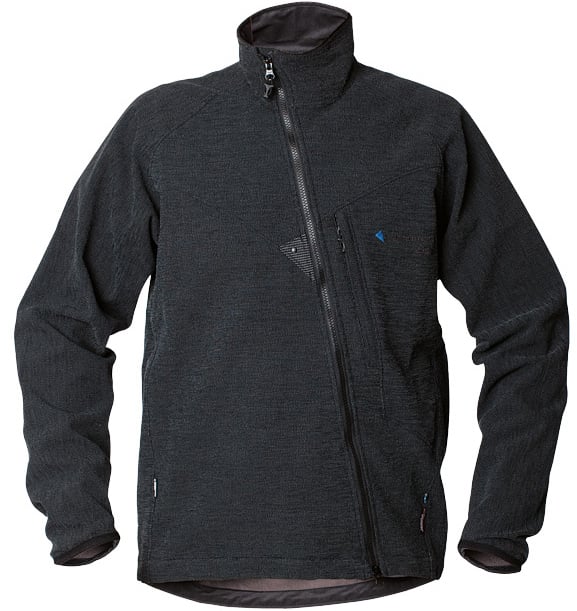
Kevlar Mithril Jacket Will Last Longer Than You!


We use kevlar and other aramid fibers for a lot of industrial power generation applications. Since it’s appallingly strong, fire-resistant, and extremely lightweight, it can be used for just about everything. If you and your company use a lot of kevlar, you might want to check out this new garment.

Especially if you’re a big Lord of the Rings fanatic.

The Mithril Kevlar Jacket is made by Klättermusen, a Swedish company whose name also looks like something from Tolkien’s classic. Originally designed to be a motorcycle jacket, the company updated it to be a generally all-around great coat. It’s supposed to last literally longer than you, and practically forever.

It weighs about 1.3 pounds, so it’s pretty light, but not too light. The Mitrhil Jacket is also wind resistant and water repellant, made with hiking, climbing, mountain biking, and basically any outdoor activity requiring durability and protection.

The jacket has won the OutDoor Industry Gold Award for its sustainability-minded design (a jacket that last forever won’t require being wastefully replaced). It retails for a bit over $500, so hopefully it lives up to its lifespan claims.


Tuesday, August 16, 2011

Puget Sound's Hydrokinetics Project


There’s a fascinating story out of the Bellingham Herald (based in Washington state) about fiberglass and industrial power generation via the power of the ocean. It outlines a project to put two hydro-electric turbines 200 feet deep in the Admiralty Inlet. Slated to be complete by the summer of 2013, it calls for the use of giant fiberglass and steel turbines to be installed in Washington’s famous Puget Sound to meet the state’s mandate to generate 15% of its power from renewable resources.

In charge of this massive project is the Pacific Northwest National Laboratory. Even though the project is being made to meet Washington state’s renewable energy mandate, it has broader applications:

If the project succeeds, scientists say, the potential for tidal power is huge. Twenty-eight coastal states consume 78 percent of the nation’s electricity, and 52 percent of the U.S. population resides in coastal counties.

Even though there are many positives coming out of the project and research behind it, there are some problems, as well. Hydro power is expensive and unreliable based on the state of technology today. Turbines break down regularly. And they may have ecological ramifications on local fish.

Regardless spending time and money on new power generation ideas—rather than refining our use of fossil fuels to extinction—seems like a good practice. There’s literally only so much fossil fuel in the ground. The oceans, if we take care of them, will last forever.

Monday, August 15, 2011

Masayuki Sono's "Postcards" Utilzies Vacuum Infusion to make Vinyl Ester Resins into Art


Custom composite resins are used in the industrial power generation industry all the time. We’re used to producing composites like vinyl ester resin using a vacuum infusion process in our daily operations, but we usually don’t see this sort of technical detail in our “normal” lives.

That’s why the decision of Masayuki Sono, architect, to use a vinyl ester resin formed by the vacuum infusion process is so surprising.

In order to make a 35 foot tall 9/11 memorial called “Postcards”, Sono cantilevered two composite wings made of vinyl ester resin. The monument is meant to evoke the Twin Towers while framing a view of lower Manhattan from Staten Island. Even though the installation is very artistic and inspirational, its creation is very technical:

After conducting a structural analysis, the engineers in charge of the project specified a composite laminate of E-glass, foam core, and vinyl ester resin. Once testing was conducted, Reichhold, Inc.’s Hydrex® 100-HF, low-styrene, 100% vinyl ester resin was selected, and NEB began building the structure using a vacuum infusion technique. The resin is designed specifically for the vacuum infusion process.

By using composites, Sono was able to realize a 30% cost saving and 90% weight saving compared to using concrete. “Postcards” is just another example of custom composites making our lives a little bit better.

Friday, August 12, 2011

Fiberglass Laptops Take a Bit Out of Apple?

Apple struck a blow in the personal computing industry with its “unibody” aluminum MacBooks. The Cuptertino company’s most recent business moves have seen it officially retire the white plastic MacBook, and a big upgrade to its svelte MacBook Air. This on the heels of of the company’s latest financial earnings call, which revealed Apple has a 10.7% share of the US computer market, making it the third-most-popular computer seller in America.

A lot of Apple’s popularity has to be attributed to its brilliant aluminum MacBook designs, which marry strength and (low) weight in perfect harmony. But a report in the Washington Post shows that aluminum is starting to be in short supply—precisely because Apple has that market practically cornered.

Fiberglass is now being touted as an alternative to aluminum for laptop manufacturers not named Apple:

The laptop makers plan to combine the latest fiberglass fabrication techniques with a plastic shell to produce something as tough and lightweight as magnesium-aluminum, but significantly cheaper.

By using fiberglass (rather than a metal alloy), laptop makers could expect to lop off $20 from the gross cost of manufacturing a laptop. That gross saving on a per unit basis means that your next laptop may be housed in fiberglass.

Wednesday, August 10, 2011

The Hidden Industrial Coal Power Generator of Camp Lejune


Looks can be deceiving. Obviously. The Camp Lejune Globe has a charming (if brief) story about the steam industrial power generator on the Marine Corps Base Camp Lejune.

Marines, sailors and patrons aboard Marine Corps Base Camp Lejeune drive on Holcomb Boulevard every day and at one point or another, glance over at the rusty industrial building and have no idea that they are looking at the steam generator plant.

The unnoticed plant actually houses two massive industrial power generators: one, dating back 70 years, is exclusively coal powered, and another, only 25 years old, runs on natural gas and diesel. Overall, the story is a lovely look at how industrial power generators don’t have to be big, flashy, or noxious in order to keep a community powered.

Tuesday, August 9, 2011

Industrial Hydropower Generator Development in Africa


Africa, roughly speaking, is growing its hydro-electric power generation capabilities. According to Dean Pratt, a power executive with ties to Africa, “There is great potential for hydro-power in Africa, particularly in South Africa, Namibia, Malawi, Zambia, Ethiopia, Kenya, Tanzania, the DRC, Zimbabwe, Ghana and Uganda.”

That’s great news for a whole continent that’s been suffering from social and economic woes for the better part of four hundred years.

This September, according to the same piece, Johannesburg will host a hydropower event, that will boast presentations and events based on industrial power generators, hydropower schemes, and more.

Monday, August 8, 2011

Smart Grid Power Generation From an Automation Standpoint

InTech, the trade publication for automation technology, has an interesting overview of Smart Grid technology. Calling it a “new buzzword in industrial circles”, the piece walks the reader through the ins and outs of Smart Grid.

In a nutshell, Smart Grid describes a sort of lean, super-efficient way of manufacturing and delivering energy. They make the analogy that Smart Grid is like an assembly line, where you need to balance the line so you don’t get a bottleneck at one station holding up other stations. Smart Grid is predicated on eliminating waste and continually improving efficiency.

One important part of the real-life applications of Smart Grid power generation is the equipment used. The InTech piece gives the example of a large, anonymous electric user:

Siemens Access Energy Management engineers worked with facility engineers and consultants to define what the existing EPMS system could do to help them with the solution. The solution was to install new closed transfer switches and some additional generator sets. The new and existing generator sets and transfer switches would be tied to the EPMS system for manual control of the utility to on-site generation. There was also a need to send generated KW, data to the existing Building Automation System (BAS), via staged dry contact closures at 25%, 50%, 75%, and 90% loading to shed load in various buildings to reduce HVAC loads during peak summer and winter months. The BAS to EPMS link was also setup with e-mail alarming if any communications were lost to the electrical generator panel. If the system failed or lost communications, the generator system would fail in “safe mode.”

The example highlights how having the right industrial power generators and power generation equipment facilitates the very most efficient Smart Grid practices.

If you’ve ever wondered at what “Smart Grid” means, or how it can help you and your business, then check out the InTech essay.

Sunday, August 7, 2011

Huntsville, Alabama Tornado Lessons


When a series of tornadoes rocketed through the Huntsville, AL area, there was massive destruction. But now that we’ve got some distance on the tragedies, we can also learn from them. Popular Mechanics just published an overview of the lessons we learned from the terrible Huntsville tornadoes.

For individuals, they advise you to stay together—don’t get cut off from the community and its ability to band together. Keep cash in hand so you can keep supplies and food in hand. Hand-crank radios are the best way to stay in touch with civilization and its larger goings on: whether rescue announcements, messages from the government, or important community info, you need to know what’s happening.

One of the most important lessons is also one of the most surprising. In the event of an emergency, it’s a good bet to go to a national hotel chain. Big hotels not only have big stocks of food and supplies, but they also have industrial power generators, which can continue to supply life-saving power when the utilities go down.

Be sure to check out the whole post for more details on the lessons we learned from the Huntsville tornadoes.