Natural Gas Leaks, Too
Last week I went briefly through the cause of the Deepwater Horizon explosion. Even though that tragedy — rightfully — got tons of national media attention, that doesn’t mean that there aren’t many industrial power generation accidents happening throughout the world.
Why, not that long ago there was a pretty big scare out in the British North Sea, though there weren’t 24/7 news updates about it.
One of the bigger natural gas drilling wells suffered a significant setback when it sprung a natural gas leak. All of the drilling platforms for a several mile radius had to be evacuated due to worries about possible explosions triggering similar disasters to the one from the Gulf of Mexico.
Unlike 2010’s Gulf tragedy, this North Sea leak has to do with a steady leak of natural gas rather than oil. Though, as we saw last week, gas leaks can quickly lead to massive complications.
One of the large concerns with this industrial power generation accident is that a steady natural gas leak will be extremely hazardous for the environment. Natural gas is a potent greenhouse gas, significantly worse than carbon dioxide. This leak has sprung up just as natural gas has seen a resurgence. The AP recently reported that there’s actually a giant surplus of natural gas, saying, “So much natural gas is being produced that soon there may be nowhere left to put the country’s swelling surplus.” And in the UK, where this recent leak occurred, Britain is in the midst of passing a $4.8 billion tax break to dismantle oil platforms and create natural gas wells.
So far, the leak is just a (rather large) cause for concern rather than a full-blown tragedy. But it will be interesting to see when reports come out as to the leak’s exact causes. Industrial power generation is not for the careless or unfortunate.
In the end, a big leak or explosion would, of course, be terrible. But it could be even worse. I recently came across the strange case of Derweze, also known as the "Door to Hell" (pictured at the top of this post). It resulted from a 1970 Soviet drilling accident in a tiny village in Turkmenistan. When a drilling rig accidentally created a huge hole in the ground that swallowed up the platform, the drillers set the hole on fire to burn off any excess gas. Well, it turns out there's a lot of excess gas, since the hole is still burning today. It is over 230 feet around. No one knows when or if it will stop burning.
Two Years Later, The Cause Is Unclear? Deepwater Explosion Not Caused By Oil.
![]() | |
I asked some of my friends and family members recently what caused the Deepwater Horizon tragedy. Even though they are all informed, smart people, not many of them knew precisely what happened — even two years later. But the truth is out there, and pretty readily discernible. Unfortunately, the nightly news doesn’t have the time or technical expertise to tell you exactly what happened.
I came across a great, in-depth post over at Energy Bulletin that goes specifically into the known knowns of why the Deepwater Horizon leak, at least, happened, which seems to have cause the massive explosion.
While the thousands of gallons of oil grabbed the headlines, gas is actually what started everything.
Specifically, gas built up very early on in the drilling and oil excavating process, which started way back on April 19. 2010. At that point, not enough cement was used at the point of drilling, some 18,000 feet below sea level. Because of that mistake, the cement seal at the floor of the ocean did not “take”, meaning that gas and mud built up where drilling took place. An increase in the measured amount of gas was charted on April 20, and pressure in the main pipe fluctuated as gas and mud worked their insidious effects at the place the cement seal. Finally, a blowout began when gas pressure overcame the wellhead seals. Gas shot straight out of the water, igniting and exploding.
So in the end, it was not the oil itself that exploded. And in fact, setting the leaking oil on fire was one option during the struggle to get the leak contained — but it was decided against as being too harmful to the local environment.
Simple gas pressure caused a critical breakdown:
The blowout and oil spill on the Deepwater Horizon in the Gulf of Mexico was caused by a flawed well plan that did not include enough cement between the 7-inch production casing and the 9 7/8-inch protection casing.
Case Western Researchers Make Fiberglass Windmill Blades As Long As Two (and a Half) Football Fields
The pace of technology increases in fiberglass technology is matched, perhaps, by only advances in green tech. And when the two industries align, things can get pretty awesome.
A recent report from MSN lists some advances made by researchers at CAse Western in Cleveland, OH.
Fatigue tests show the reinforced polyurethane composite lasts about eight times longer than epoxy reinforced with fiberglass. The new material was also about eight times tougher in delamination fracture tests, according to the researchers.
The researchers expect to make blades that are 250 meters long, by 2020. To give you an idea, maybe, of that ridiculous size: picture a full football field, then picture another one, then picture half of another one. That's how long the windmill blades will be.
The only expected downside of these huge strides in fiberglass and power generation technology are the usual ones, the NIMBYs. (NIMBY stands for "Not in my back yard.") Of course, I wouldn't necessarily want a gigantic windmill in my backyard, but that seems pretty unlikely. Seeing giant windmills in the distance would actually make me proud of my home area, that it wants to invest in green tech and generating power in a sustainable way. But only time will tell how well implemented Case Western's fiberglass windmill tech becomes.
![]() |
| The SIC Power Grid of Chile |
There’s some unfortunate news out of Chile this week. It looks like the South American nation is facing extended power shortages due to a crushing drought affecting the country. (Remember, south of the equator it’s the opposite season.) Since a good amount of Chile’s industrial power generation comes from hydroelectric plants, the draught is affecting the country in several very bad ways.
This power shortage could have bad effects for the rest of the world, too. Chile is the world’s leading producer of copper — it makes almost a third of the world’s supply. Though the government has said the power shortage would leave the country’s copper mines unaffected, a power shortage should cause infrastructure problems and price increases that have tertiary affects on the economy.
The power shortage is so bad that the government is thinking of instituting a power rationing plan — only the third time the government’s intervened over the last fifteen-odd years. Reservoir levels are at a pitifully low level, and a power-rationing move could reduce as much as 5% to 10% of the country’s power generation.
The main primary industrial power generators supplying energy to the drought-affected SIC power grid are Empresa Nacional de Electricidad SA (EOC, ENDESA.SN), AES Corp. (AES) through its Gener SA (GENER.SN) unit, and Colbun SA (COLBUN.SN).
Fiberglass Whale Set For Cleaning Soon
Of course I'm talking about the gigantic whale hanging from the ceiling at the American Museum of Natural History in New York City. The giant blue whale is made of fiberglass of polyurethane. To give you a sense of its scale (life sized, apparently), it is 94 feet long and weighs 21,000 pounds. Despite its massive weight, hundreds of people walk under and sit under the whale model every day.
The big blue whale hasn't been cleaned in two years. Looks like it's due.
Custom Composite Battery Boxes For The Next-Next-Gen Hybrid Auto
Sure, you've got your Toyota Prius. Or maybe you've got a Ford Fusion hybrid. Or one of those new Chevy Volts. Those hybrid automobiles are OK. But they lack a certain... custom composite battery technology.
What do composites have to do with hybrid automobiles, you may be wondering? Well, researches out in Germany look to have developed a crash-resistant battery case for automobiles. On the one hand, it's not extremely difficult to create a crash-resistant case for automobile batteries, but given their power output (read: a sight less than a V8 Hemi), keeping weight down is a prime concern. Hence the custom composite casing.
According to this news report,
The Ernst-Mach Institute has developed a mass-production-ready, crash-safe battery housing that meets strict requirements. The battery housing that surrounds the battery that weighs 340 kilograms (749.57 lbs.) only weighs 35 kilograms (77.16 lbs.) [...] The battery housing can withstand a crash, assuming a ten-fold gravitational acceleration.“ And even if a sharp object collides with the housing at 60 km/h (45mph), the highly sensitive battery on the inside remains intact.
Not only are these composite material battery boxes lighter than metal alternatives, but they're also easily mass-producible, making them a potentially cost effective solution.
Southern Spars Spurs Innovation In Custom Composites
In this case, we're talking about the very most demanding nautical application: world-class superyachting. A New Zealand company called Southern Spars has recently unveiled some new custom composites technology it calls "TPT" or "thing ply technology". TPT is a supposedly revolutionary new laminate composite. Says Wayne Smith of Southern Spars,
"Our designers now have the ability to design products using whichever ply angles are optimal for the loading situation at every point on the spar or boom," he says.
"The plotter then lays the carbon fibre laminate more accurately and efficiently than can be achieved by hand.
"It is also possible to individually position pieces rather than being required to lay all adjacent plies parallel to one another."
That's pretty awesome, especially when you consider the unbearable loads these components will be handling on the superyacht circuit. Our neighbors to the very far south are certainly coming up with some sweet composite technology.
Custom Composites On Deck, Literally
Think custom composites don't have much application in a non-power generation application? NorthJersey.com would have you know you're wrong.
Even though it comes toward the end of the season, the online paper has a nice breakdown of different deck and patio options. (If you live in the northeast, you can bookmark this one for next year.) Included in the survey is a discussion of wood versus composites:
Traditional decks are constructed of pressurized wood that has been chemically treated to help increase the life of the lumber — in fact, that’s now the law [...] Over time, wood cracks, needs to be refinished, or splinters, so treating it may slow the aging process, but it doesn’t necessarily look any younger. Composite material has a little longer lifespan and requires far less maintenance.
So when it comes to decks and patios, you select composites and that's that, right? Well, ideally. Composites cost four to five times as much as their wood counterparts up front. Then again, they last longer and require much less by way of repairs and maintenance.
At the end of the day, the choice between wood and composites will come down to your available money right now, and how much you think you can budget for the future. You also may just plain prefer wood or composites for aesthetic reasons, of course. The North Jersey story is pretty in-depth, though, with some words of wisdom from folks in the industry. Check it out for a little change of pace!
Pennsylvania Hits a Solar Power Milestone, According to PennFuture
A 100 MW solar capacity means solar energy can produce the amount of pollution-free energy needed to completely power over 12,600 per year. Not too bad for the Keystone State.
In just four years, again according to PennFuture, the state has grown from 3 MW to its present level of 100 MW. That's just tremendous growth! Overall, it's also accounted for more than 6,700 jobs and 600 solar-related businesses.
While many green tech ventures like solar power are time- and cost-intensive, they can be hugely beneficial one they're up and running. Solar power certainly represents an investment, and its present technological state is sure to be improved upon, but as Pennsylvania has shown, by being dedicated to an ideal, truly great levels of solar accomplishment can be reached in relatively short time.
GE Energy Adds Converteam to its $30 Billion Power Portfolio
General Electric Corp. has been on an industrial power generation roll lately. They've spent over $11 billion (with a "b") the last few months, and they're set to add to that with the acquisition of Converteam, for $3.2 billion.
The GE energy unit has taken over scads of companies lately, including Dresser Inc., Wellstream Holdings, Lineage Power, and part of the John Woods Group. GE's energy-sector portfolio is now estimated to be worth north of $30 billion.
Converteam is a power generation company based out of France. It supplies power electronics, rotating machines, generators, and energy controls to for large industrial power generation outfits like gas pipelines. It looks like GE is betting big on power, which is, of course, a strong bet! So far, there's been only one direction in human progress: Upward. And as the population and industry expand, the demand for power will only increase.
Bushehr Nuclear Plant Raises Questions As Well As Power Generation
Overall, the plant in Bushehr will have a 1,000 MW power generating capacity. The plant was originally started in concert with Siemens. But after the partnership fell through, it was built with Russian help; there are also some inklings of Chinese and North Korean involvement, based on Iran's recent behavior.
An Iranian Parliament member has recently been reported to be scheduled to visit North Korea, the first such visit since the 1980s.
As Iran inches into nuclear power, it is disturbing that the country maintains involvement with such totalitarian governments as North Korea. Nuclear power is a great boon, which should not go abused by those with dark motives.
The Indian State of Gujarat Suffers Power Cutbacks
There was a setback to Indian industrial power generation this week. At least a dozen power generators have shut down in the Indian state of Gujarat, according to some reports.
The shutdowns are credited to a decreased demand for power, which seems kind of odd for such a brisk economy. Though there have been some heavy rains that may account for the drop off. The power generation decrease of these twelve generators accounts for over a quarter of the state's power generation, bringing total power from 13,354 MW to less than 10,000 MW.
As farming and agriculture continue to take hits from the weather, it looks like power production will continue to stay low in Gujarat, which has suffered sub-par power production since July of this year. Some private power generators like Gujarat Industries Power Company Limited have been shut down completely in recent days.
Hopefully this beleaguered Indian state can get back up to snuff in the power generation department. Paying for infrastructure is a costly affair, and having a dozen power generators sit inoperable exacerbates an already poor situation.
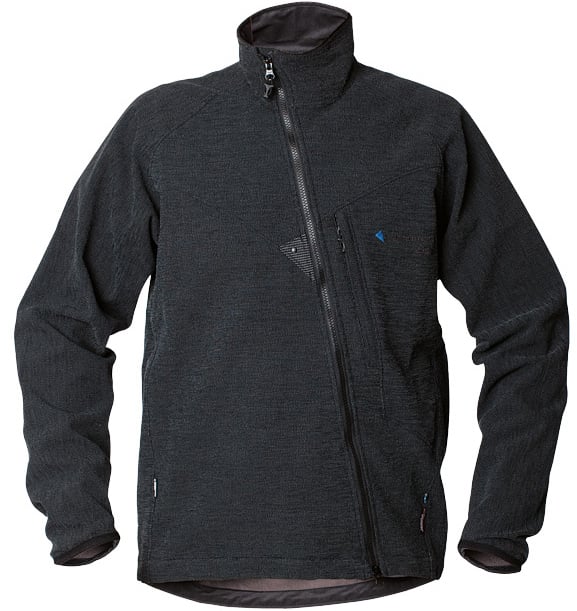
Kevlar Mithril Jacket Will Last Longer Than You!

We use kevlar and other aramid fibers for a lot of industrial power generation applications. Since it’s appallingly strong, fire-resistant, and extremely lightweight, it can be used for just about everything. If you and your company use a lot of kevlar, you might want to check out this new garment.
Especially if you’re a big Lord of the Rings fanatic.
The Mithril Kevlar Jacket is made by Klättermusen, a Swedish company whose name also looks like something from Tolkien’s classic. Originally designed to be a motorcycle jacket, the company updated it to be a generally all-around great coat. It’s supposed to last literally longer than you, and practically forever.
It weighs about 1.3 pounds, so it’s pretty light, but not too light. The Mitrhil Jacket is also wind resistant and water repellant, made with hiking, climbing, mountain biking, and basically any outdoor activity requiring durability and protection.
The jacket has won the OutDoor Industry Gold Award for its sustainability-minded design (a jacket that last forever won’t require being wastefully replaced). It retails for a bit over $500, so hopefully it lives up to its lifespan claims.
Puget Sound's Hydrokinetics Project

There’s a fascinating story out of the Bellingham Herald (based in Washington state) about fiberglass and industrial power generation via the power of the ocean. It outlines a project to put two hydro-electric turbines 200 feet deep in the Admiralty Inlet. Slated to be complete by the summer of 2013, it calls for the use of giant fiberglass and steel turbines to be installed in Washington’s famous Puget Sound to meet the state’s mandate to generate 15% of its power from renewable resources.
In charge of this massive project is the Pacific Northwest National Laboratory. Even though the project is being made to meet Washington state’s renewable energy mandate, it has broader applications:
If the project succeeds, scientists say, the potential for tidal power is huge. Twenty-eight coastal states consume 78 percent of the nation’s electricity, and 52 percent of the U.S. population resides in coastal counties.
Even though there are many positives coming out of the project and research behind it, there are some problems, as well. Hydro power is expensive and unreliable based on the state of technology today. Turbines break down regularly. And they may have ecological ramifications on local fish.
Regardless spending time and money on new power generation ideas—rather than refining our use of fossil fuels to extinction—seems like a good practice. There’s literally only so much fossil fuel in the ground. The oceans, if we take care of them, will last forever.
Masayuki Sono's "Postcards" Utilzies Vacuum Infusion to make Vinyl Ester Resins into Art

Custom composite resins are used in the industrial power generation industry all the time. We’re used to producing composites like vinyl ester resin using a vacuum infusion process in our daily operations, but we usually don’t see this sort of technical detail in our “normal” lives.
That’s why the decision of Masayuki Sono, architect, to use a vinyl ester resin formed by the vacuum infusion process is so surprising.
In order to make a 35 foot tall 9/11 memorial called “Postcards”, Sono cantilevered two composite wings made of vinyl ester resin. The monument is meant to evoke the Twin Towers while framing a view of lower Manhattan from Staten Island. Even though the installation is very artistic and inspirational, its creation is very technical:
After conducting a structural analysis, the engineers in charge of the project specified a composite laminate of E-glass, foam core, and vinyl ester resin. Once testing was conducted, Reichhold, Inc.’s Hydrex® 100-HF, low-styrene, 100% vinyl ester resin was selected, and NEB began building the structure using a vacuum infusion technique. The resin is designed specifically for the vacuum infusion process.
By using composites, Sono was able to realize a 30% cost saving and 90% weight saving compared to using concrete. “Postcards” is just another example of custom composites making our lives a little bit better.
Fiberglass Laptops Take a Bit Out of Apple?
Apple struck a blow in the personal computing industry with its “unibody” aluminum MacBooks. The Cuptertino company’s most recent business moves have seen it officially retire the white plastic MacBook, and a big upgrade to its svelte MacBook Air. This on the heels of of the company’s latest financial earnings call, which revealed Apple has a 10.7% share of the US computer market, making it the third-most-popular computer seller in America.
A lot of Apple’s popularity has to be attributed to its brilliant aluminum MacBook designs, which marry strength and (low) weight in perfect harmony. But a report in the Washington Post shows that aluminum is starting to be in short supply—precisely because Apple has that market practically cornered.
Fiberglass is now being touted as an alternative to aluminum for laptop manufacturers not named Apple:
The laptop makers plan to combine the latest fiberglass fabrication techniques with a plastic shell to produce something as tough and lightweight as magnesium-aluminum, but significantly cheaper.
By using fiberglass (rather than a metal alloy), laptop makers could expect to lop off $20 from the gross cost of manufacturing a laptop. That gross saving on a per unit basis means that your next laptop may be housed in fiberglass.
The Hidden Industrial Coal Power Generator of Camp Lejune

Looks can be deceiving. Obviously. The Camp Lejune Globe has a charming (if brief) story about the steam industrial power generator on the Marine Corps Base Camp Lejune.
Marines, sailors and patrons aboard Marine Corps Base Camp Lejeune drive on Holcomb Boulevard every day and at one point or another, glance over at the rusty industrial building and have no idea that they are looking at the steam generator plant.
The unnoticed plant actually houses two massive industrial power generators: one, dating back 70 years, is exclusively coal powered, and another, only 25 years old, runs on natural gas and diesel. Overall, the story is a lovely look at how industrial power generators don’t have to be big, flashy, or noxious in order to keep a community powered.
Industrial Hydropower Generator Development in Africa

Africa, roughly speaking, is growing its hydro-electric power generation capabilities. According to Dean Pratt, a power executive with ties to Africa, “There is great potential for hydro-power in Africa, particularly in South Africa, Namibia, Malawi, Zambia, Ethiopia, Kenya, Tanzania, the DRC, Zimbabwe, Ghana and Uganda.”
That’s great news for a whole continent that’s been suffering from social and economic woes for the better part of four hundred years.
This September, according to the same piece, Johannesburg will host a hydropower event, that will boast presentations and events based on industrial power generators, hydropower schemes, and more.
Smart Grid Power Generation From an Automation Standpoint
InTech, the trade publication for automation technology, has an interesting overview of Smart Grid technology. Calling it a “new buzzword in industrial circles”, the piece walks the reader through the ins and outs of Smart Grid.
In a nutshell, Smart Grid describes a sort of lean, super-efficient way of manufacturing and delivering energy. They make the analogy that Smart Grid is like an assembly line, where you need to balance the line so you don’t get a bottleneck at one station holding up other stations. Smart Grid is predicated on eliminating waste and continually improving efficiency.
One important part of the real-life applications of Smart Grid power generation is the equipment used. The InTech piece gives the example of a large, anonymous electric user:
Siemens Access Energy Management engineers worked with facility engineers and consultants to define what the existing EPMS system could do to help them with the solution. The solution was to install new closed transfer switches and some additional generator sets. The new and existing generator sets and transfer switches would be tied to the EPMS system for manual control of the utility to on-site generation. There was also a need to send generated KW, data to the existing Building Automation System (BAS), via staged dry contact closures at 25%, 50%, 75%, and 90% loading to shed load in various buildings to reduce HVAC loads during peak summer and winter months. The BAS to EPMS link was also setup with e-mail alarming if any communications were lost to the electrical generator panel. If the system failed or lost communications, the generator system would fail in “safe mode.”
The example highlights how having the right industrial power generators and power generation equipment facilitates the very most efficient Smart Grid practices.
If you’ve ever wondered at what “Smart Grid” means, or how it can help you and your business, then check out the InTech essay.
Huntsville, Alabama Tornado Lessons

When a series of tornadoes rocketed through the Huntsville, AL area, there was massive destruction. But now that we’ve got some distance on the tragedies, we can also learn from them. Popular Mechanics just published an overview of the lessons we learned from the terrible Huntsville tornadoes.
For individuals, they advise you to stay together—don’t get cut off from the community and its ability to band together. Keep cash in hand so you can keep supplies and food in hand. Hand-crank radios are the best way to stay in touch with civilization and its larger goings on: whether rescue announcements, messages from the government, or important community info, you need to know what’s happening.
One of the most important lessons is also one of the most surprising. In the event of an emergency, it’s a good bet to go to a national hotel chain. Big hotels not only have big stocks of food and supplies, but they also have industrial power generators, which can continue to supply life-saving power when the utilities go down.
Be sure to check out the whole post for more details on the lessons we learned from the Huntsville tornadoes.